
A quick detailer is a lubricant first and a gloss product second. Used on a genuinely dusty panel, it drags grit rather than lifting it.
What Quick Detailer Is — And What It Is Not
A quick detailer (QD) — also sold as a spray detailer or detail spray — is a dilute, lubricant-rich spray solution designed to safely remove light surface contamination — dust, fingerprints, light water spots, and fresh bird droppings — between full washes, while simultaneously depositing a thin protective layer. The key word is lubrication: the surfactants in a QD encapsulate dust particles and allow them to be lifted off the surface by a microfibre cloth without dragging abrasively across the paint. Without this lubrication, wiping a dusty car with even a soft cloth would create fine scratches. A QD is the product that makes maintenance wiping safe.
What a QD cannot do is equally important to understand. It cannot remove embedded contamination, bonded water spots, bird dropping etching that has sat for more than a few hours, or any form of oxidation. It will not add meaningful protection to bare paint — the polymer layer it deposits is extremely thin and lasts days, not weeks. Using a QD as a substitute for regular washing leads to contamination buildup that eventually becomes much harder to remove. Think of it as a maintenance spray between washes, not a replacement for them.
In Indian conditions, a QD is particularly useful during the post-monsoon season when construction dust, dry road grit, and biological matter settle rapidly on freshly washed cars. It is also the correct tool for removing the thin layer of dust that accumulates overnight when a car is parked outdoors — a scenario that affects virtually every Indian car owner who does not have covered parking.
How To Use Quick Detailer Without Creating Scratches
The most common mistake with QD is using it on too much surface contamination. If there is visible grit or heavy dust, a QD is not the right tool — that car needs a full wash. QD is for the light dusty film that settles after a wash or overnight. To test whether the surface is QD-safe, lightly run a clean fingertip across the surface. If you feel gritty resistance, wash first. If it feels smooth with only a fine powder, QD is appropriate.
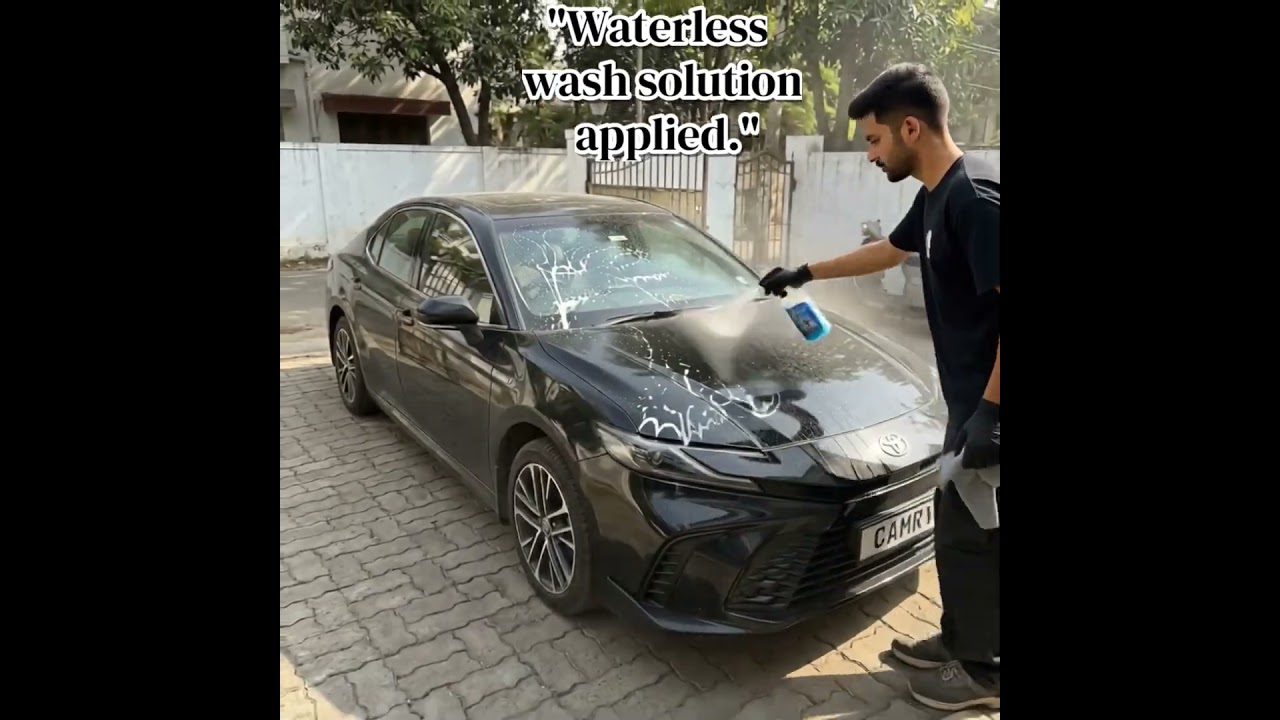 Using a quick detailer correctly
Work one panel at a time. Mist 3–4 sprays onto a 60x40 cm folded microfibre cloth — not directly onto the car — then apply to the panel using light, overlapping straight-line passes. Flip the cloth to a clean face and do a final light buff. Microfibre quality matters enormously here. A 300 GSM or higher, short-pile cloth is ideal. The cheap thin microfibres sold in multipacks at roadside shops are often too rough and can scratch despite the lubricating effect of the QD. Invest in at least 4–6 quality cloths so you are always working with a clean face.
Keep a separate dedicated QD cloth only for paint surfaces — never use the same cloth that has touched door jambs, tyres, or engine bay. Label your cloths with coloured cable ties or permanent marker to prevent cross-contamination. In Indian workshops and home garages, microfibre management is widely ignored and is a major cause of unnecessary scratching during routine maintenance.
Use two towels: one lightly misted to wipe, and a second dry one to buff. The first towel is the one picking up dust, so swap it for a clean one as soon as it looks grey — a loaded towel is what turns a quick wipe into fine scratches.
When Quick Detailer Is Safe — and When It Isn't
Safe: a light film of dust on a car washed in the last day or two, fingerprints, pollen, fresh bird droppings and water spots that haven't had time to dry in. For a bird dropping, let the spray soak in for 30 seconds or so and lift it off rather than wiping across it. Work on cool panels in the shade — on hot paint the spray evaporates before it can lubricate, and it streaks.
Not safe: anything you can feel as grit under a fingertip, mud splashes on the lower panels, the grimy film left when rain dries on the car, or a car that has done several days of city driving since its last wash. That much dirt needs water to carry it away — a rinse and a proper wash, or at the very least a waterless wash with plenty of towels. Quick detailer is the last step to a clean car, not the way to get a dirty car clean.
Choosing a Quick Detailer for Indian Conditions
Look for three things. First, lubrication: a detailer meant for dusty conditions says so on the label and feels slick between your fingers. Second, a finish that matches your protection — SiO2 (ceramic) detailers suit coated cars and sealants, while carnauba-based ones suit waxed cars and add a warmer gloss. Third, how it behaves in heat: some products flash off quickly in a warm garage and streak easily, so try any new one on a single panel first.
SiO2 detailers add a thin, short-lived layer of slickness and water beading each time you use them, which helps a coating or sealant keep performing between washes. They don't replace the base protection, and they won't revive a coating that has already failed.
You can make a basic quick detailer at home: about 20 ml of pH-neutral car shampoo and 5–10 ml of a spray sealant in a litre of distilled water (tap water leaves mineral spots as it dries). Shake before each use. It costs far less than a branded detailer, but homemade mixes vary — test it on one panel first, and if it streaks, use less shampoo. Some rinseless and waterless wash concentrates also give a quick-detailer dilution on the label; if yours does, that is the simpler option.