
Clay doesn't clean the surface — it shears off contamination bonded above the clear coat. Drop it on the ground once and it must be thrown away.
What Clay Bar Is Actually Removing From Your Paint
A clay bar is a pliable, synthetic or natural clay compound that physically decontaminates paint by shearing bonded surface contaminants away from the clear coat through mechanical action combined with a lubricant. The contaminants it removes are not visible to the naked eye but are easily felt — run a clean fingertip across an unwashed panel and you feel a rough, gritty texture. That texture comes from embedded industrial fallout, iron particles from brake dust, bitumen and tar deposits, tree sap residue, and rail dust that have bonded to the surface of the clear coat over months of driving.
In Indian urban conditions, the contamination load on paint is exceptionally high. Construction activity in most Indian cities releases cement particles and mineral dust that bond aggressively to paint. Heavy diesel vehicle traffic generates soot and combustion byproducts that accumulate on horizontal surfaces. Parking near railway lines — extremely common in Indian cities — deposits iron particles that rust on the paint surface, showing up as tiny orange dots under strong light. No amount of washing removes these bonded particles; clay barring is the only safe mechanical decontamination method available to the home detailer.
Step-By-Step Clay Bar Process For Indian Conditions
Clay barring should always be done after washing but before applying any protection product. Start with a freshly washed, dry car. Take a 50g section of clay from your bar and knead it into a flat disc roughly the size of your palm. Apply generous amounts of clay lubricant — a dedicated clay lube spray or diluted car shampoo at 10:1 water ratio — to a 30x30 cm section of paint and to the clay itself. The lubrication is critical: clay dragged across dry paint is highly abrasive and will mar the surface severely.
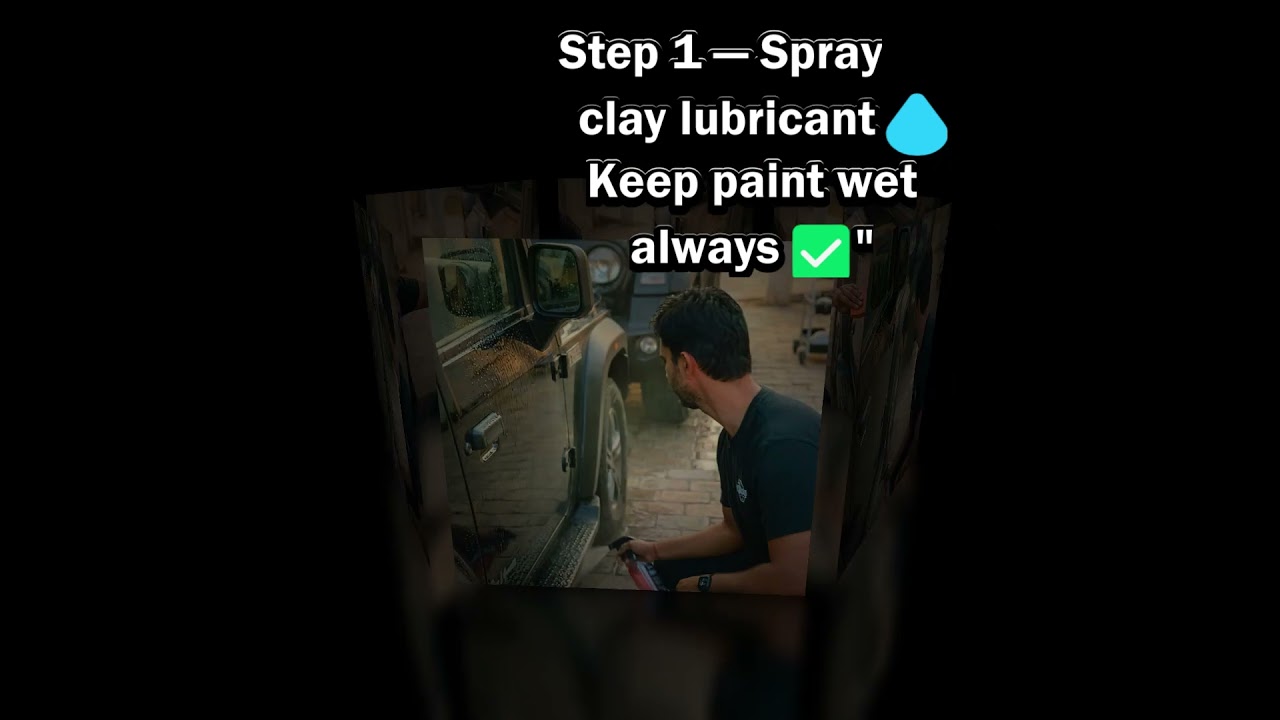 Using a clay bar to decontaminate paint
Work the clay back and forth in straight lines with light, even pressure. Within the first few passes you will feel the clay pulling and dragging as it contacts contaminants — this resistance is normal and is the clay shearing particles away. As you continue, the motion becomes progressively smoother as the surface decontaminates. Once the clay glides with minimal resistance, that section is done. Fold the clay to a fresh face between sections to prevent recontamination. If you drop the clay on the ground, discard that portion — ground contamination embedded in the clay will scratch paint on reuse.
After completing the full car, wipe away lubricant residue with a clean microfibre and run your fingertip across the surface again. The difference is immediately apparent — the paint should feel glass-smooth. This smooth base is ideal for paint sealant or wax application, which bonds more effectively and lasts longer on decontaminated paint. In India, a full decontamination clay session twice per year — once before monsoon and once after — is the recommended frequency for cars driven in urban conditions.
After clay barring, always follow immediately with an IPA wipe-down (70% isopropyl alcohol diluted 1:1 with distilled water) before applying any protection product. The clay process leaves behind microscopic clay residue and lubricant oils that reduce protection bonding if not removed. The IPA wipe takes less than 5 minutes and ensures maximum sealant or ceramic coating adhesion.
Reading the Results — What Contamination Tells You
The clay bar collects contamination from the paint surface, and what it collects reveals the contamination history of the car. A grey or brown residue on the clay surface after treating a panel indicates general road grime and dust contamination — normal for any car driven in Indian cities. Distinct orange or rust-coloured marks on the clay indicate iron contamination from brake dust, a particular problem on the front panels and lower doors near wheel arches. Black smearing indicates tar contamination, common on lower panels and the rear bumper from road spray.
After claying, fold the clay bar to expose a clean surface before moving to the next panel. Never reuse clay that has been dropped — a bar that has touched the floor picks up grit that will scratch the paint, and it can't be cleaned out. When the clay can no longer be folded to expose a clean section, replace it. A single clay bar typically treats 2–3 full cars before replacement.
Clay Bar Alternatives Available in India
Traditional clay bars are not the only decontamination option. Clay mitts — a microfibre-like mitt with an abrasive clay surface — cover larger areas faster and are reusable after washing. Clay pads for DA polishers speed up the process significantly on large panels. For Indian detailers who treat their car regularly, a clay mitt offers better value than single-use clay bars.
Synthetic clay mitts, cloths and pads — Nanoskin AutoScrub is a well-known example — are increasingly available through Indian specialist importers. Their polymer-rubber face can be rinsed clean if dropped, which a traditional bar can't, and they last much longer, though they cost more upfront.
When Clay Bar is Not Enough
Clay bar removes bonded surface contamination but cannot remove contamination that has etched into the clear coat. Water spot rings that remain after clay bar treatment have etched into the surface and require polishing to remove. Similarly, clay bar cannot remove paint overspray that has hardened over a long period — this requires wet sanding. Understanding the limits of clay bar prevents using it as a solution for problems it cannot address.
After clay bar treatment on a car that has not been decontaminated in over a year, the improvement in surface texture is immediately noticeable. The plastic bag test — running a bag over the surface to feel roughness — should show a dramatically smoother, more glassy surface after thorough clay bar treatment. If roughness remains after a complete pass, repeat the clay bar process before moving to protection application.
In Indian conditions with heavy dust, high pollen count, and significant industrial pollution in metro areas, clay bar treatment every 6 months is the recommended frequency. Cars in high-traffic areas of Delhi, Mumbai, or Chennai benefit from quarterly decontamination due to significantly higher contamination levels than cleaner air cities.
Quick Challenge
DecontaminateSolvedHalfway through claying your car, the clay bar slips and lands on the garage floor. What do you do?
You are using a traditional clay bar with plenty of lubricant, and two panels are left.
Remember: Once clay touches the ground, it’s done. Cut your bar into pieces before you start so a fresh one is always ready.
Read next: Wax or sealant after claying?