
Why Road Tar Is One Of The Most Damaging Contaminants On Indian Cars
Road tar — technically bituminous asphalt splatter — is one of the most tenacious contaminants that accumulates on the lower panels, wheel arches, and sills of Indian cars. Fresh tar lands as a soft, sticky splash, then hardens and bonds firmly to the paint as it cools and ages. Washing won't remove it, and a clay bar tends to smear it and clog up; it needs a solvent-based tar remover to dissolve it first. Attempting to pick or scrape tar deposits off by hand is a common mistake that invariably damages the clear coat underneath.
 Removing tree sap fused into car paint
Indian roads present a particularly high tar contamination risk due to the widespread use of bitumen-based road surfacing that softens in summer heat and releases fresh tar spray when vehicles drive over it. Freshly laid roads — a near-constant feature of Indian cities undergoing infrastructure work — are the most problematic. A single drive behind a tar-laying vehicle or over fresh blacktop in summer can deposit dozens of tar spots across the lower panels, front bumper, and even the bonnet if the vehicle ahead kicks up spray. The contamination is often not visible until the car dries, at which point it has already partially hardened.
The Correct Tar Removal Process
Tar removal requires a dedicated tar and glue remover — a solvent-based product that dissolves the bituminous compound and releases its bond with the paint. Several car-care brands sell tar and adhesive removers in India, at accessory shops and online. Check the label says tar, bitumen or adhesive removal specifically — a spray detailer or quick detailer is not a tar solvent, however well it works for dust and fingerprints. Don't use petrol, which is a fire risk, or acetone and nail-polish remover, which can soften paint and plastic trim. Kerosene-type solvents and WD-40 do loosen tar, but they leave an oily film that strips wax and has to be washed off — a proper tar remover does the job more cleanly.
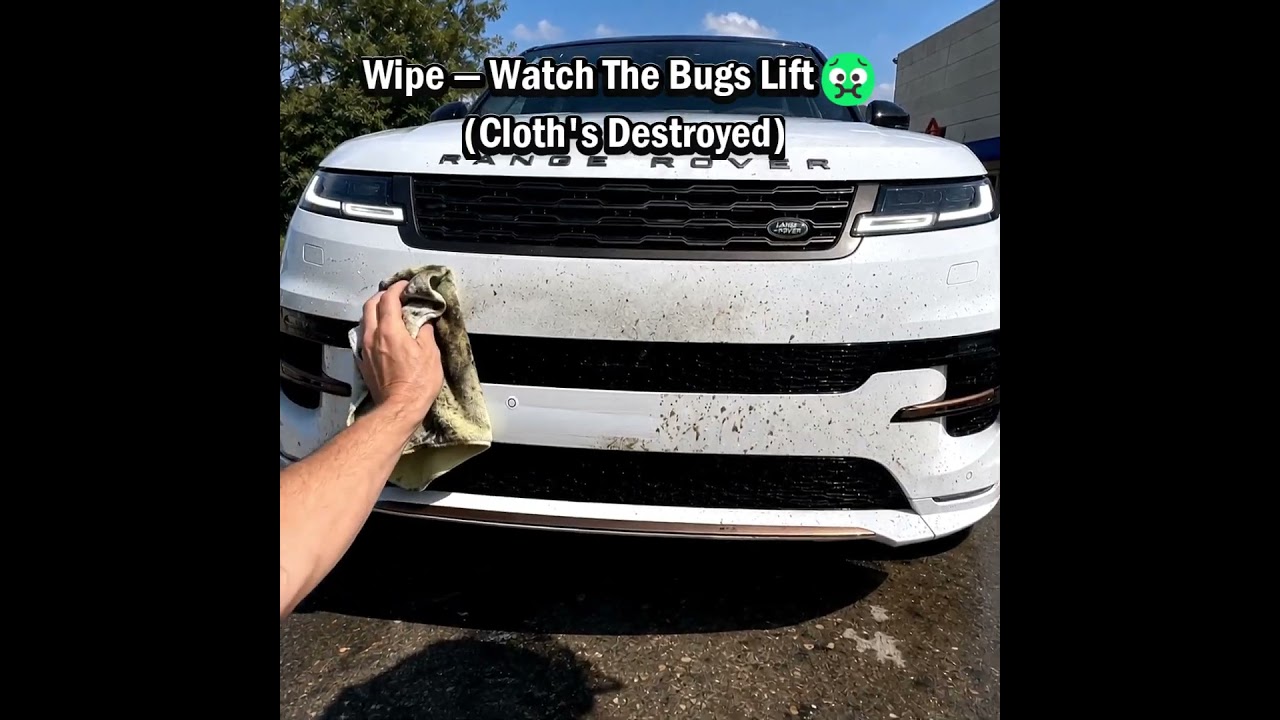 Removing bug splatter and road tar from paint
Apply the tar remover by spraying or dabbing onto the affected area with a microfibre cloth and allow to dwell for 30–60 seconds. The solvent needs time to penetrate and soften the tar deposit. Then wipe gently with a clean section of cloth — well-softened tar should transfer easily to the cloth without requiring heavy pressure. For older, hardened deposits, a second application and longer dwell time may be needed. Work one small area at a time rather than coating the entire panel, as the solvent can strip wax and light sealant from treated paint if left on too long.
After tar removal, wash the treated areas with car shampoo to remove the solvent residue, then inspect carefully. Any areas where the clear coat feels rough or appears hazy may have micro-etching from long-dwell tar — treat these with a light polish pass to restore clarity. Finish with a protection reapplication on the cleaned areas, as the tar remover will have stripped any existing wax or sealant in those zones. In India, particularly after monsoon and road-patching season, a full lower-panel tar decontamination every 3–4 months is a sensible part of the maintenance calendar.
Fresh tar — still soft or tacky — is far easier to remove than hardened deposits. During road-work season, which in most Indian cities runs outside the monsoon, keep a bottle of tar remover at home and treat new spots the same day; they need only a short dwell and come off cleanly. Left until the weekly wash, tar hardens and becomes much harder to shift. (Don't store solvent sprays in a parked car — summer cabin temperatures are far above what aerosol cans are rated for.)
Identifying Tar vs Other Contamination on Indian Cars
Indian road contamination includes several black or dark brown substances that can be confused with tar. Identifying the contamination type correctly prevents using the wrong removal product — which either fails to remove the contamination or damages the paint.
Road tar and bitumen from freshly laid surfaces appears as irregular dark spots or splashes, primarily on the lower panels, wheel arches, and rear bumper. Fresh tar is slightly soft and may have a slight shine. Old tar hardens and becomes firmly bonded, appearing dull and raised from the surface. A dedicated tar remover (solvent-based) dissolves the tar's hydrocarbon chains and allows wipe removal.
Brake dust contamination appears as fine orange-brown spots rather than black splashes — the oxidation of iron particles gives brake dust its distinctive colour. Brake dust does not respond to tar remover but dissolves completely with iron remover. Using tar remover on brake dust and iron remover on tar both fail — correct identification before treatment saves time and product.
Rubber tyre deposits — black streaks from spinning tyres or tyre contact in tight spaces — look similar to tar but have a different texture. Tyre rubber deposits are slightly elastic and have a rubbery feel. APC (All Purpose Cleaner) diluted 1:5 removes fresh tyre rubber deposits effectively. Old tyre deposits may require tar remover for complete removal.
Preventing Tar Contamination on Indian Cars
Tar accumulation can be significantly reduced through driving habits on newly surfaced roads. Freshly laid Indian roads — a constant presence in most cities during infrastructure projects — release tar spray for several days after laying. The spray is heaviest immediately behind heavy construction vehicles and road rollers. Keeping a longer gap behind other vehicles on freshly surfaced roads cuts down how much tar is thrown onto your car.
A fresh sealant or ceramic coating makes tar much easier to deal with. Tar still sticks, but it bonds to the slick protection layer rather than directly to the clear coat, so it usually comes off with tar remover and a light wipe. The same spots on unprotected paint often need several applications and more agitation — one more reason to keep the paint protected.
Tar remover solvents are effective but aggressive. Always test on a hidden area first — particularly on plastic trim and rubber seals where some tar removers cause softening or discolouration. Apply with a dedicated microfibre applicator to tar spots only rather than spraying broadly across panels. Rinse thoroughly after removing tar before the solvent carrier evaporates and leaves residue. Follow up with a quick detailer or maintenance spray to restore surface protection on the treated areas.
Quick Challenge
DecontaminateSolvedAfter driving over a freshly tarred road, your lower doors are covered in black spots. How do you remove them?
The spots hardened overnight and didn’t come off in a normal wash.
Remember: Fresh tar comes off far more easily, so deal with it soon. Use a product made for tar, and test it on a hidden spot first.
Read next: Paint sealant guide