
Modern engine bays tolerate light water. The real risk is pressure and direction — forcing water into fuse boxes, alternators and air intakes, not the water itself.
Preparation And Safety Steps Before Starting
Engine bay cleaning done carelessly causes electrical faults, water-logged connectors and occasionally a car that won't start. Done with ten minutes of preparation, it's safe.
Let the engine cool completely — at least 30 minutes after driving, longer in summer, ideally a few hours. Cold water on hot parts stresses rubber and plastic, cleaners evaporate before they can work, and water on a hot exhaust manifold turns to steam that can carry moisture into connectors.
Cover the sensitive parts with plastic bags — any kirana-shop bag works — held with rubber bands or tape:
- the fuse and relay box, usually near the battery or on the firewall
- the alternator, if you can reach it
- the air intake and filter housing, so no water can be drawn into the engine
- the battery terminals, especially if they show any corrosion
- any exposed electronic modules
About the battery: disconnecting the negative terminal removes any risk of a short, but on many modern cars it also resets the radio, clock and some learned settings, and a few need a security code afterwards — check your owner's manual first. If you keep water off the electrics as described, most modern cars don't need it.
The Correct Cleaning Sequence And Technique
Start with a dry clean before introducing any water. Use a long-bristled detailing brush to loosen dried dirt, leaves, and debris from corners, around coolant reservoir caps, and behind the battery. Vacuum up the loosened material before it becomes a slurry when water is added. This dry-first approach removes the majority of loose contamination without the risk of spreading dirty water into sensitive areas.
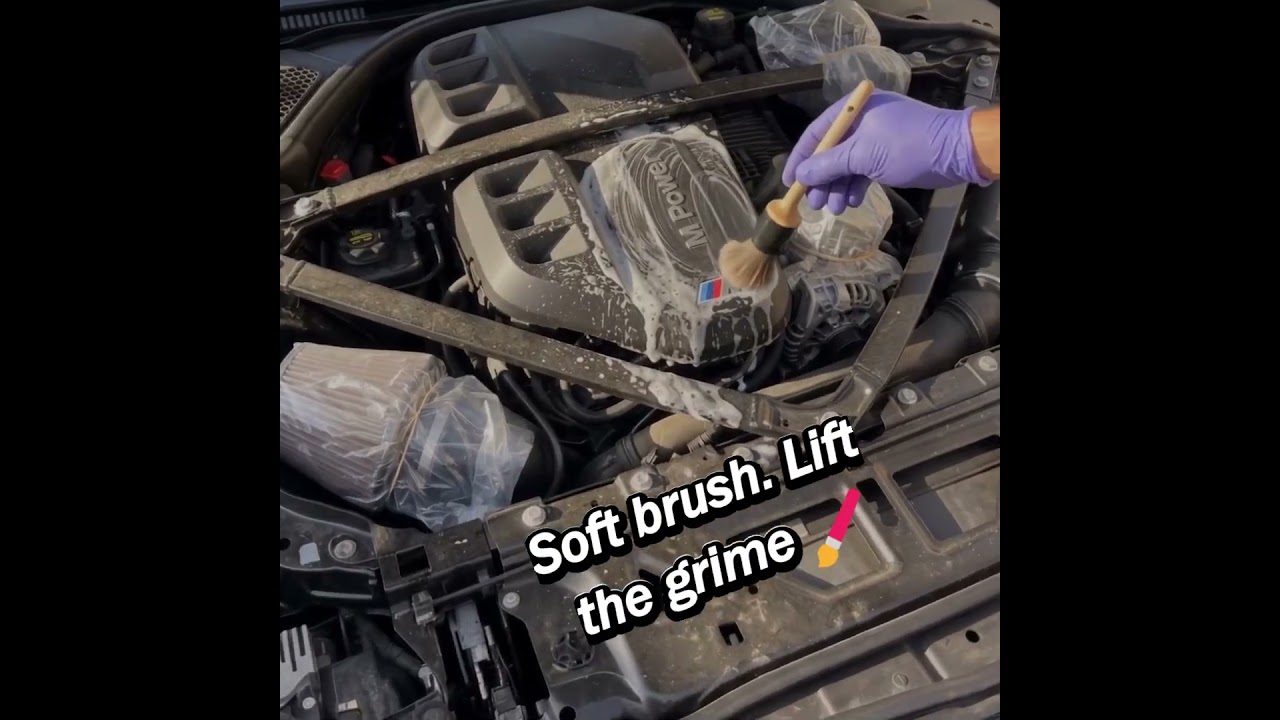 Cleaning an engine bay safely
Apply an APC (all-purpose cleaner) at 1:10 dilution using a spray bottle — not a pressure washer at this stage. Work the APC into contaminated areas with a range of brushes: a large barrel brush for the battery top and large flat surfaces, a medium detailing brush for around hose connections and the alternator housing, and a small detail brush for cable looms, cable clips, and sensor housings. Allow the APC to dwell for 2–3 minutes to break down the oily grime layer, then agitate again before rinsing.
Rinse with a hose on a gentle shower setting — never a high-pressure jet. Keep the nozzle at least 30 cm from all surfaces and rinse from the back of the bay toward the front, allowing water to drain forward through the grille. Avoid directing water streams at the fuse box, alternator, or any uncovered electrical component regardless of the bag protection — the goal is to rinse the cleaning product away, not to penetrate sealed components. After rinsing, use compressed air or a leaf blower to displace surface water from crevices, cable loom gaps, and around electrical housings before starting the engine (and reconnecting the battery, if you disconnected it).
After engine bay cleaning, apply a thin coat of a rubber and plastic protectant to all hoses, rubber gaskets, and plastic covers while they are clean and dry. This step takes 10 minutes and provides UV protection that significantly extends the life of rubber components in India's harsh sun exposure. It also makes future engine bay cleaning easier — a protected rubber surface releases grime more easily than bare rubber.
Post-Monsoon Engine Bay Inspection
The period after Indian monsoon — October and November — is the most important time for engine bay inspection. Four months of high humidity, road splash in heavy rain, and potential water ingress creates ideal conditions for corrosion development on bare metal and electrical connector corrosion. A post-monsoon engine bay clean followed by careful visual inspection identifies rust development before it becomes structural damage and connector corrosion before it causes electrical faults.
After cleaning and before applying any dressing, run the engine for 5–10 minutes to dry residual moisture from the engine bay completely. Water left in electrical connectors and around metal components causes corrosion that develops slowly over weeks. The heat of the running engine evaporates this moisture safely. Apply a thin coat of rubber and plastic protectant to all rubber hoses and plastic covers after drying — the post-monsoon period is when these materials are most susceptible to cracking from the contrast between monsoon humidity and pre-winter dry air.